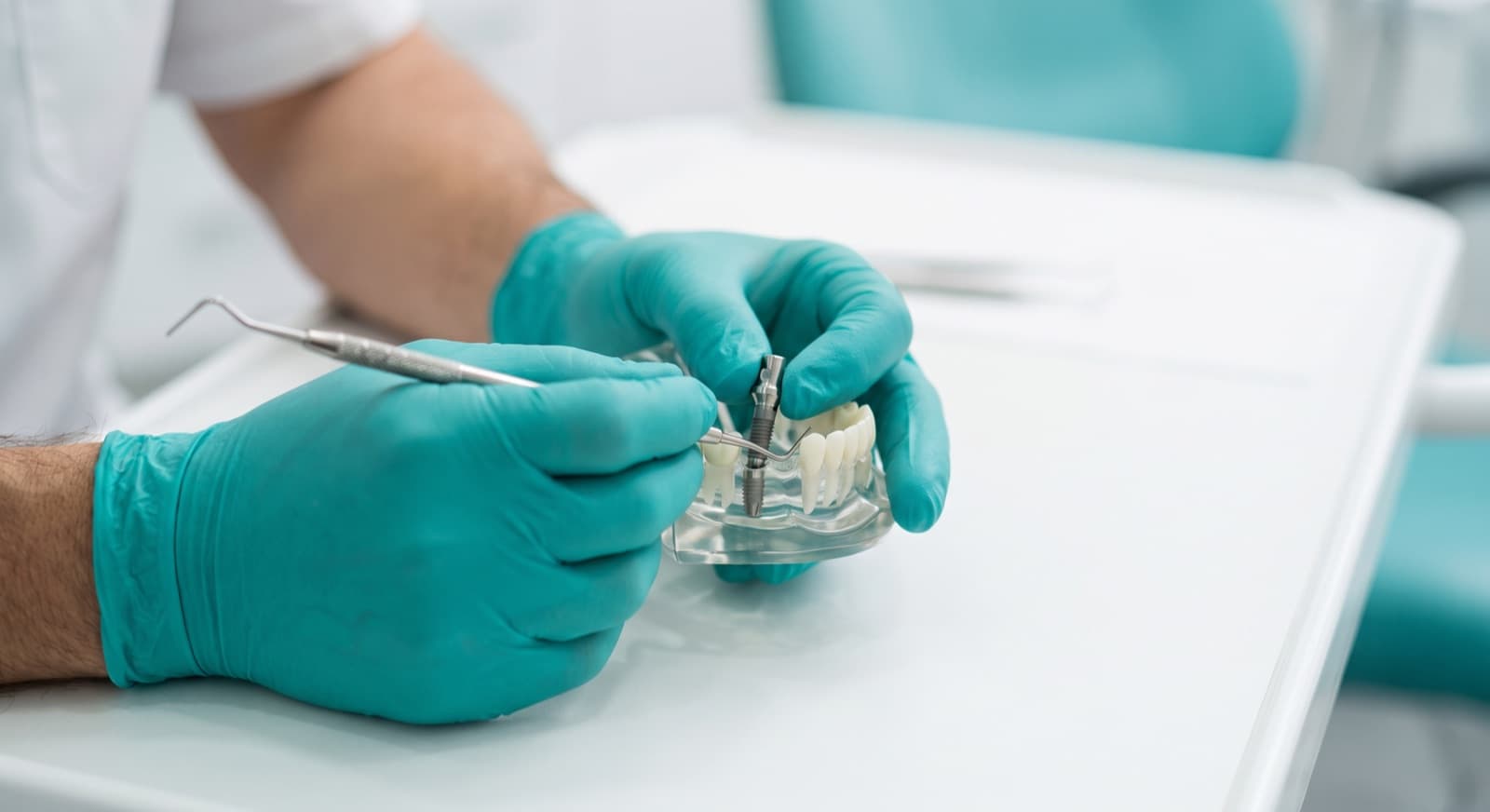
Choosing an implant dentist is one of the bigger decisions you will make about your long-term dental health, and it is worth understanding how a dentist actually works before you sit in the chair. Dr. Jin-Ho Cho, principal dentist at Shine Dental Newington, graduated with a Bachelor of Dental Surgery from the University of Sydney in 1987. In the 35+ years since, he has placed 9,000+ dental implant fixtures and serves as a Key Opinion Leader for the DIO Implant System, a global implant manufacturer. Those are the verifiable facts. What this article covers is something the numbers alone cannot show: the process behind his dental implant treatment, from the first examination through to the final restoration.
Why Assessment Always Comes First
Dr. Cho's starting point for every implant patient is the same: no treatment recommendation before a proper assessment. That sounds obvious, but in practice it means he will not discuss which implant option suits you — or whether an implant suits you at all — until he has completed a digital examination and reviewed your medical and dental history.
The assessment looks at the tooth or teeth in question, but also at everything around them: the health of your gums, the condition of neighbouring teeth, your bite, any signs of grinding or clenching, and general health factors such as diabetes or medications that can influence healing. Sometimes this first appointment reveals that something else needs attention before implants can even be considered — active gum disease is a common example. In Dr. Cho's view, treating that first is not a delay; it is the treatment plan working correctly. An implant placed into an unhealthy mouth is a plan built on the wrong foundation.
How 3D CBCT Imaging Shapes the Plan
Where indicated, the assessment includes a 3D CBCT (cone beam computed tomography) scan taken on site. A standard two-dimensional X-ray shows a flat image; a CBCT scan shows the jaw in three dimensions — the height and width of the available bone, the position of the nerve canal in the lower jaw, and the location of the sinus floor in the upper jaw.
This matters because implant dentistry is, at its core, a planning discipline. The scan lets Dr. Cho determine the length, diameter, position and angle of an implant fixture before any surgery begins, rather than making those judgements mid-procedure. It also identifies situations where the available bone is limited and additional steps, such as grafting, may need to be discussed. If you want to see where imaging sits in the overall sequence, our guide to the dental implant procedure step by step walks through each stage.
Why Dr. Cho Works With the DIO Implant System
Patients often ask which implant system will be placed in their jaw, and it is a fair question — an implant is a long-term medical device, and the brand behind it matters for component availability and documentation years down the track.
Dr. Cho works with the DIO Implant System, and his relationship with it goes beyond simply ordering parts. As a Key Opinion Leader (KOL) for DIO, he engages with the manufacturer's clinical education and product development activities. In practical terms, that means he works with the system in depth: its fixtures, surfaces, surgical protocols and restorative components. Familiarity of that kind is useful for patients, because implant treatment is smoother when the dentist knows the system thoroughly rather than switching between brands. You can read more in our article on the DIO Implant System and Dr. Cho's role.
Staged Treatment and Transparent, Itemised Quoting
Implant treatment usually happens in stages — assessment, any preparatory work, fixture placement, healing, and then the final crown or bridge. Dr. Cho's approach is to map those stages out in writing before you commit to anything.
After your consultation, you receive a written, itemised quote listing each procedure with its dental item number. Item numbers are the standardised codes used across Australian dentistry, and they matter for two reasons. First, they make the quote transparent: you can see exactly what each stage involves. Second, they allow your health fund to tell you precisely what rebate applies. Shine Dental processes claims on the spot through HICAPS and is a preferred provider for CBHS and NIB. Medicare typically does not cover routine adult dental treatment, so knowing your fund position early is genuinely useful. The overall fee depends on your individual case — our article on the factors that shape dental implant costs in Sydney explains what moves a quote up or down.
What Experience Changes in Complex Cases
Straightforward single-implant cases follow a well-established path. Where 35+ years and 9,000+ placed fixtures make a practical difference is in the cases that are not straightforward.
Patients who have worn dentures for years, or who lost teeth long ago, often present with significant bone loss. Full-arch cases — where an entire upper or lower set of teeth is replaced on a small number of implants using an All-on-X approach — demand careful decisions about how many fixtures to use, where the bone can best support them, and how the stages should be sequenced. Experience does not change biology, and no ethical dentist promises a particular result. What it does change is planning judgement: recognising anatomical variations early, knowing which of several viable approaches suits a particular jaw, anticipating complications before they arise, and being honest when a simpler option serves the patient better than a more ambitious one. Many patients also ask about comfort during treatment — our article Do dental implants hurt? covers that honestly.
Book a Consultation With Dr. Cho
If you are considering dental implants, the most useful next step is an assessment rather than more reading. Dr. Cho consults in both English and Korean at Shine Dental Newington, Unit 5, 8 Avenue of Americas, Newington NSW 2127, with onsite parking available. The practice serves Newington, Sydney Olympic Park, Wentworth Point, Auburn, Lidcombe, Ermington, Rydalmere, Homebush and Silverwater. Call (02) 9748 4822 or book your consultation online — you will leave with a clear picture of your options and a written, itemised quote to consider in your own time.