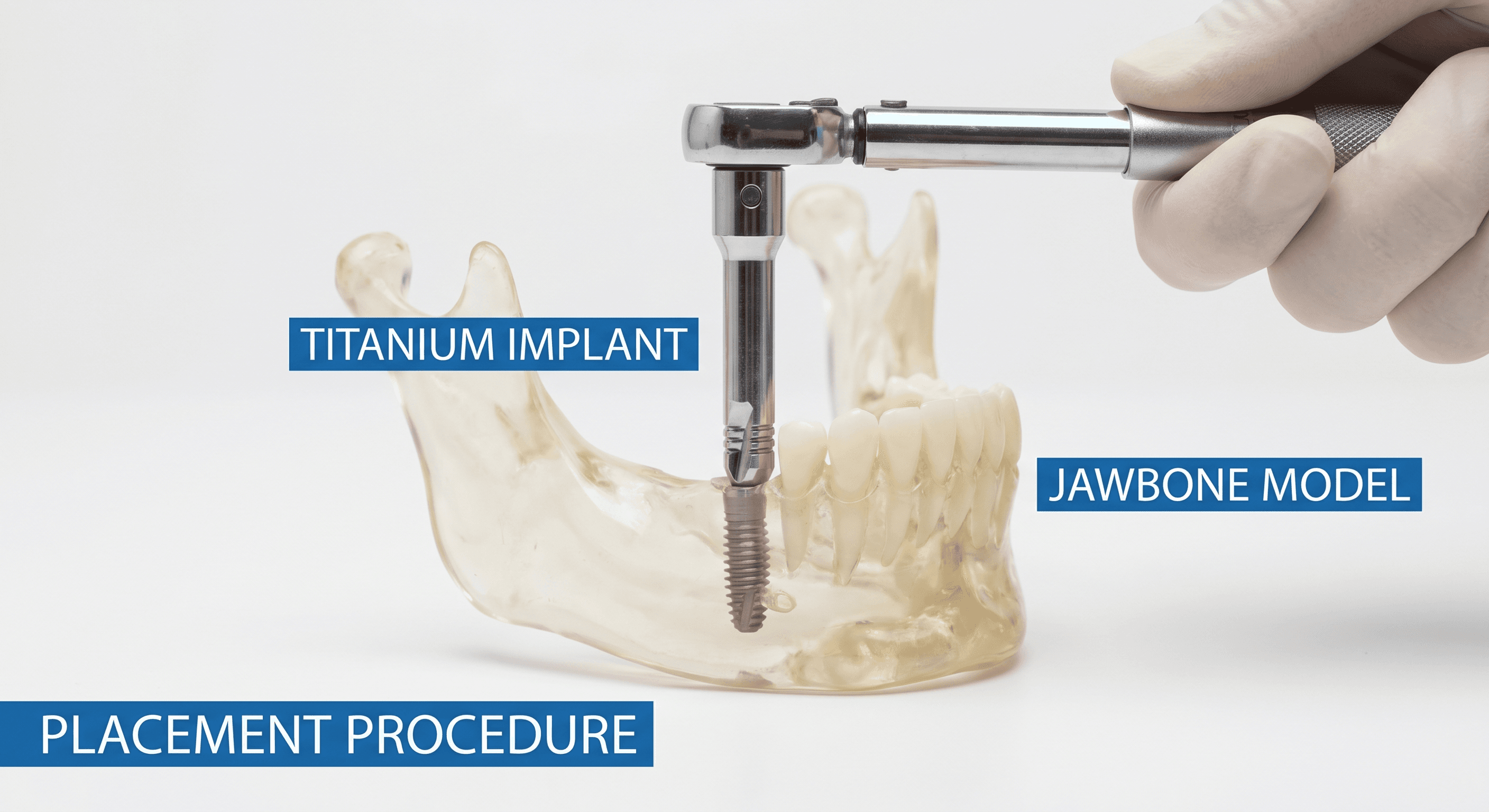
Dental implants are designed to last for decades — but only with proper care. Just like natural teeth, implants need consistent maintenance to stay healthy and functional. Here's your complete guide to looking after your dental implants.
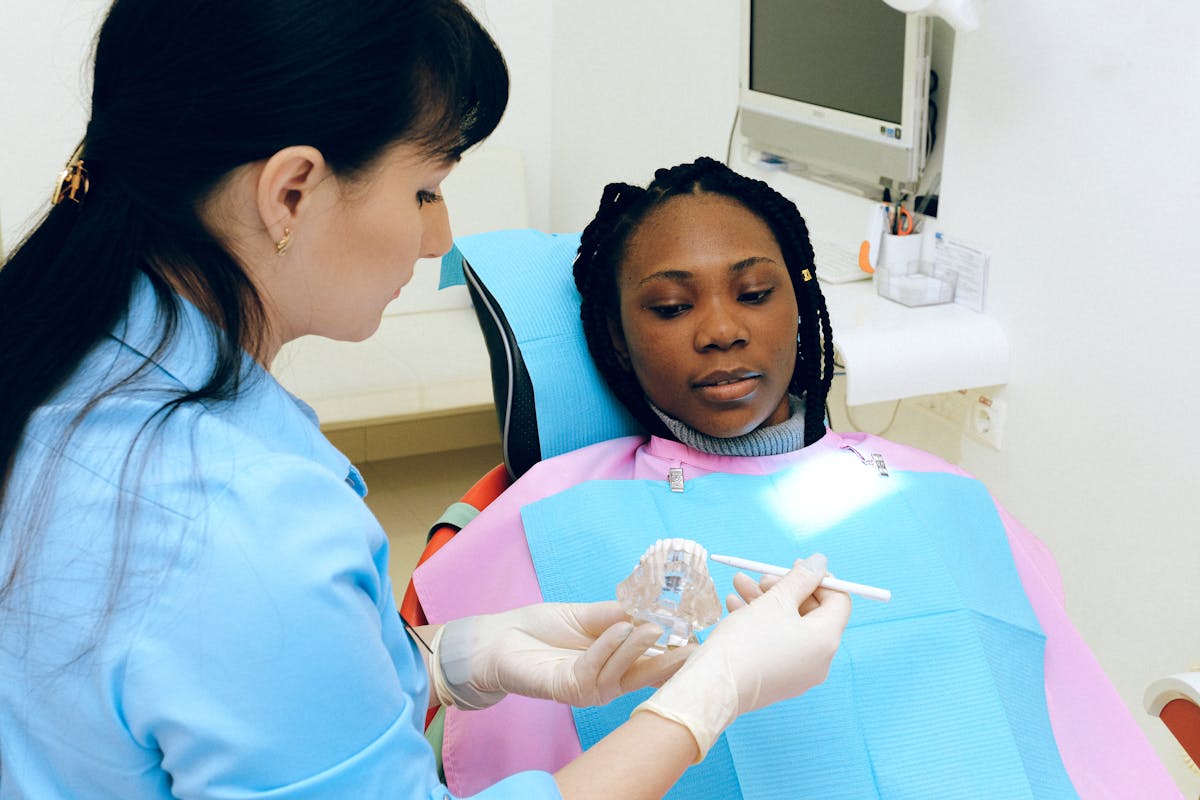
Why Implant Aftercare Matters
While the titanium implant post itself can't develop cavities, the gum tissue and bone surrounding it absolutely can develop problems. The most significant threat to implant longevity is peri-implantitis — a condition similar to gum disease that causes inflammation and bone loss around the implant.
Without proper care, peri-implantitis can progress to the point where the implant loses its support and fails.
Daily Care Routine
Brushing
- Use a soft-bristled toothbrush (manual or electric) to clean all surfaces of the implant crown
- Brush at least twice daily — morning and before bed
- Use a non-abrasive toothpaste (avoid products with baking soda or harsh abrasives)
- Pay special attention to the gum line where the crown meets the gum tissue
- Angle the brush at 45 degrees toward the gum line to clean beneath the margin
Flossing and Interdental Cleaning
- Floss around implants daily using unwaxed tape or implant-specific floss
- Interdental brushes are excellent for cleaning between implants and natural teeth
- A water flosser (like Waterpik) is particularly useful for cleaning around implants, especially for All-on-X bridges where access beneath the prosthesis is important
- Avoid metal instruments near the implant — use nylon or soft picks
Antimicrobial Rinse
Your dentist may recommend a chlorhexidine or antimicrobial rinse. Use only as directed — long-term daily use of chlorhexidine can cause staining.
Professional Maintenance Schedule
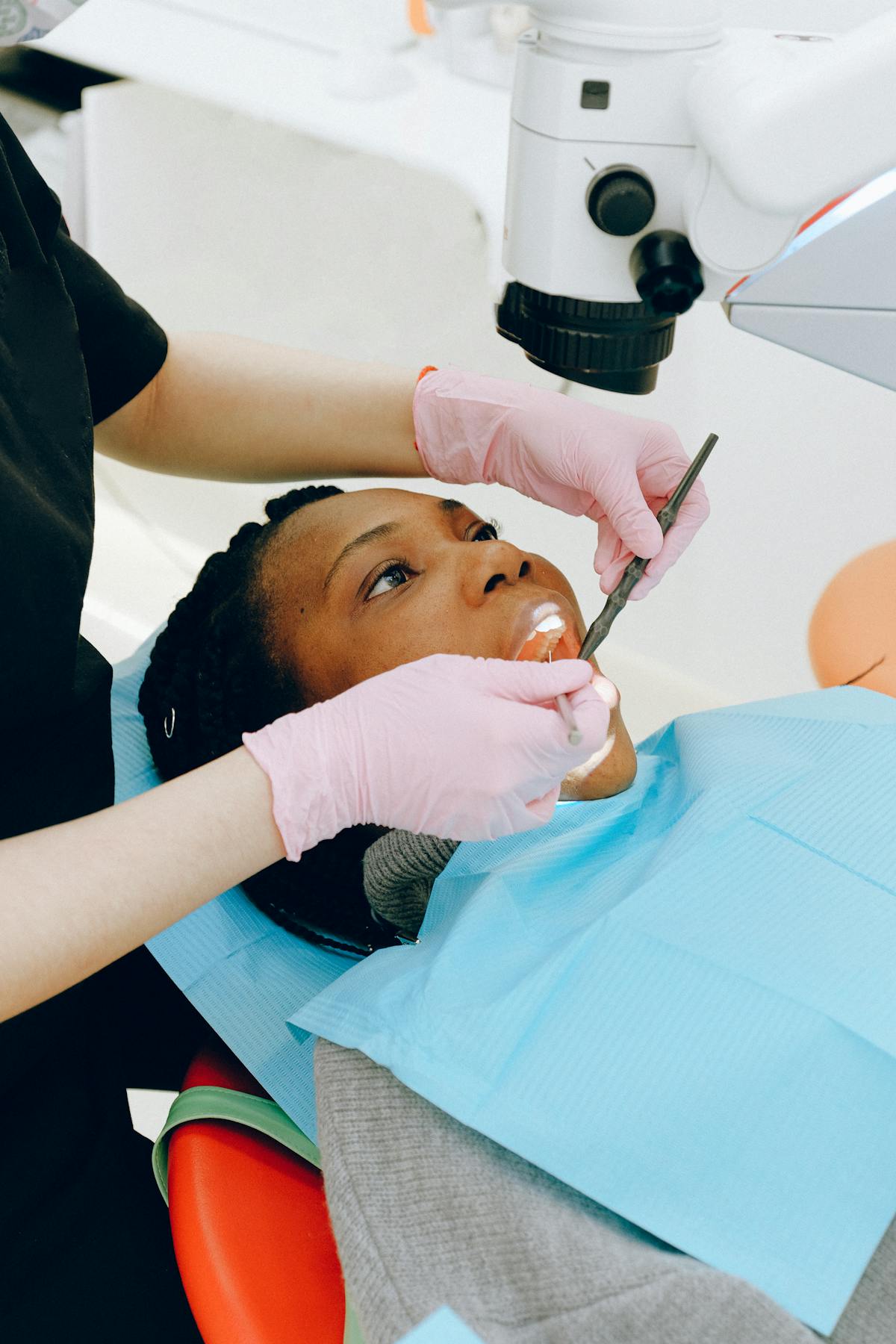
Regular professional cleaning is essential for implant patients. At Shine Dental, we recommend:
- Every 6 months: Professional cleaning using implant-safe instruments (no metal scalers on implant surfaces)
- Annual review: Assessment of implant stability, gum health, and bone levels via X-ray
- As needed: Adjustments to the bite if the crown shows uneven wear
During professional cleans, we use specialised instruments — plastic or titanium-tipped scalers — that clean effectively without scratching the implant surface. Scratches create rough areas where bacteria can accumulate.
Warning Signs to Watch For
Contact Shine Dental if you notice any of the following:
| Symptom | Possible Issue |
|---------|---------------|
| Gum redness or swelling around the implant | Early peri-implantitis |
| Bleeding when brushing near the implant | Gum inflammation |
| Persistent bad taste or odour | Bacterial accumulation |
| Implant feeling loose or mobile | Advanced bone loss |
| Pain or discomfort around the implant | Infection or mechanical issue |
| Crown feels loose or clicks | Abutment screw loosening |
Early intervention is key. Peri-implantitis caught early is manageable; left untreated, it can lead to implant loss.
Habits to Avoid
To protect your investment in dental implants, avoid:
- Smoking — the single greatest risk factor for implant failure. Smoking restricts blood flow to the gums and compromises healing and long-term bone health
- Chewing hard objects — ice, pens, hard sweets, and nut shells can crack the crown
- Using teeth as tools — opening bottles, tearing packaging
- Grinding or clenching — if you have bruxism, a custom night guard protects both implants and natural teeth
- Abrasive toothpaste — can scratch the surface of implant crowns
Caring for Different Types of Implant Restorations
Single Implant Crowns Care is essentially the same as for natural teeth — brush, floss, and attend regular check-ups.
Implant-Supported Bridges Use floss threaders or a water flosser to clean beneath the bridge where it spans the gap. Food and bacteria can accumulate in this area.
All-on-X Full-Arch Bridges These require extra attention: - A water flosser is highly recommended for cleaning beneath the bridge - Specialised brushes can reach areas a regular toothbrush cannot - Professional cleanings are particularly important — the bridge may occasionally need to be removed for thorough cleaning and inspection
Long-Term Expectations
With proper care, dental implants have an excellent track record:
- The titanium post can last a lifetime
- The implant crown may need replacement after 10–15 years due to normal wear
- Regular monitoring helps catch and address minor issues before they become major problems
Dr. Cho, with over 9,000 implants placed during his 35+ year career, emphasises that patient commitment to aftercare is just as important as the surgical skill that placed the implant.
Frequently Asked Questions
Can I use an electric toothbrush on implants?
Yes, and many dentists recommend it. Electric toothbrushes with pressure sensors are particularly good, as they help prevent over-brushing.
How often should I see the dentist after getting implants?
We recommend visits every 6 months for professional cleaning and assessment. Some patients with a history of gum disease may benefit from more frequent visits.
What happens if the crown on my implant chips?
A chipped crown can usually be repaired or replaced without affecting the implant itself. Contact Shine Dental for an assessment.
Is it normal for implants to feel different from natural teeth?
Implants lack the periodontal ligament that natural teeth have, so the sensation of pressure is slightly different. Most patients adapt quickly and find their implants feel very natural.
Keep Your Implants Healthy for Life
Proper care ensures your implants serve you well for decades. Book a check-up at Shine Dental to have your implants professionally assessed and cleaned.
Patients from Newington, Wentworth Point, Auburn, Silverwater, Sydney Olympic Park, and Lidcombe can easily visit our clinic for ongoing implant maintenance.
Call (02) 9748 4822 or book a hygiene appointment.
Shine Dental — Unit 5, 8 Avenue of Americas, Newington NSW 2127
Open Mon–Wed & Fri 9am–5pm, Thu 9am–12pm