Wisdom teeth don't always announce their arrival with dramatic pain. Sometimes the signs are subtle, and sometimes they go unnoticed until a dental X-ray reveals the problem. Understanding the symptoms of impacted wisdom teeth helps you seek treatment before complications develop.
What Are Impacted Wisdom Teeth?
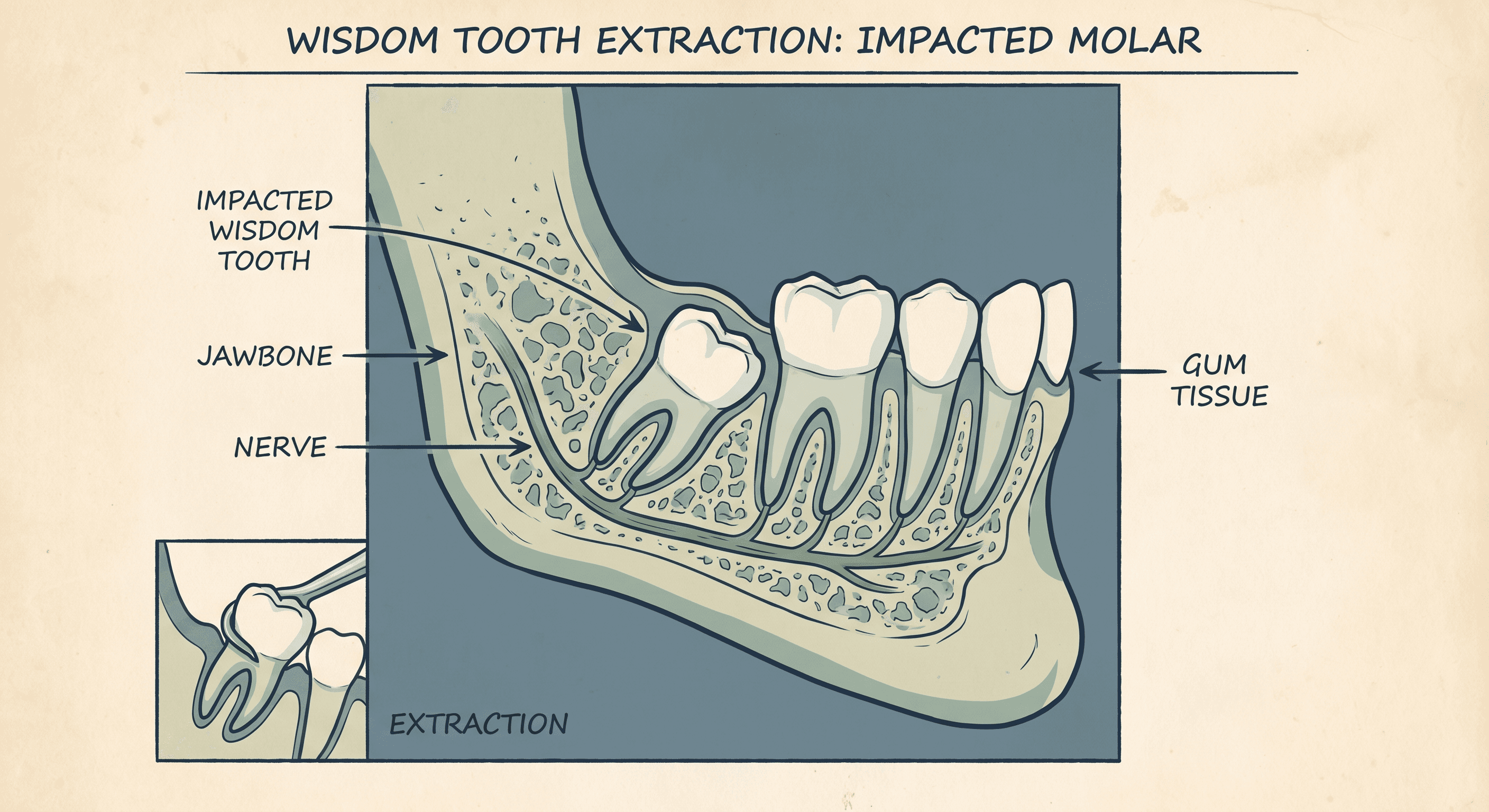
Wisdom teeth (third molars) are the last teeth to develop, typically emerging between ages 17 and 25. When there isn't enough room in the jaw for them to erupt properly, they become "impacted" — stuck beneath the gum, partially erupted, or growing at an angle.
There are several types of impaction:
- Mesioangular — the tooth is angled toward the front of the mouth (most common)
- Distoangular — the tooth is angled toward the back of the mouth
- Horizontal — the tooth is lying on its side
- Vertical — the tooth is in the correct position but can't break through the gum
Warning Signs to Watch For
1. Pain and Tenderness at the Back of the Jaw
The most common symptom is a dull, persistent ache in the area behind your last molar. This pain may:
- Come and go in waves
- Intensify when chewing or biting
- Radiate to the ear, temple, or surrounding teeth
2. Swollen, Red, or Tender Gums
The gum tissue around a partially erupted wisdom tooth often becomes inflamed. You might notice:
- A swollen flap of gum tissue over the tooth (called an operculum)
- Redness and tenderness when you press the area
- Gum tissue that bleeds easily when brushing
3. Jaw Stiffness and Difficulty Opening Your Mouth
Impacted wisdom teeth can cause:
- Stiffness when opening your mouth wide
- Pain when yawning or taking large bites
- A feeling of tightness along the jaw
4. Bad Breath and Unpleasant Taste
Partially erupted wisdom teeth create pockets where food and bacteria accumulate. This can lead to:
- Persistent bad breath (halitosis) despite good brushing habits
- An unpleasant taste in the mouth, especially around the affected area
5. Headaches
Pressure from impacted wisdom teeth can cause referred pain, including headaches that seem unrelated to your teeth. If you're experiencing frequent headaches alongside any other symptoms on this list, mention it to your dentist.
6. Swelling in the Face or Cheek
In more advanced cases, infection from an impacted wisdom tooth can cause visible swelling in the cheek or lower face. This is a sign to seek prompt dental care.
7. Damage to Adjacent Teeth
Wisdom teeth growing at an angle can push against the second molars, causing:
- Aching or sensitivity in the neighbouring tooth
- Crowding or shifting of other teeth
- Decay on the back surface of the adjacent molar (hard to clean and hard to see)
Why Early Detection Matters
Impacted wisdom teeth don't always cause symptoms immediately. But left untreated, they can lead to:
- Pericoronitis — infection of the gum tissue around a partially erupted tooth, causing pain, swelling, and difficulty swallowing
- Cyst formation — fluid-filled sacs that can develop around unerupted teeth, potentially damaging the jawbone
- Tooth decay — partially erupted wisdom teeth are difficult to clean, making them and adjacent teeth vulnerable to cavities
- Damage to neighbouring teeth — roots and crowns of adjacent teeth can be compromised
When to Seek Assessment
We recommend a wisdom tooth assessment if you're experiencing any of the symptoms above, or if:
- You're between 16 and 25 and haven't had your wisdom teeth evaluated
- Your regular dentist has noticed wisdom teeth on X-rays
- You feel pressure building at the back of your jaw
How Are Impacted Wisdom Teeth Diagnosed?
During your consultation at Shine Dental, Dr. Cho will:
- Examine the back of your mouth visually and with instruments
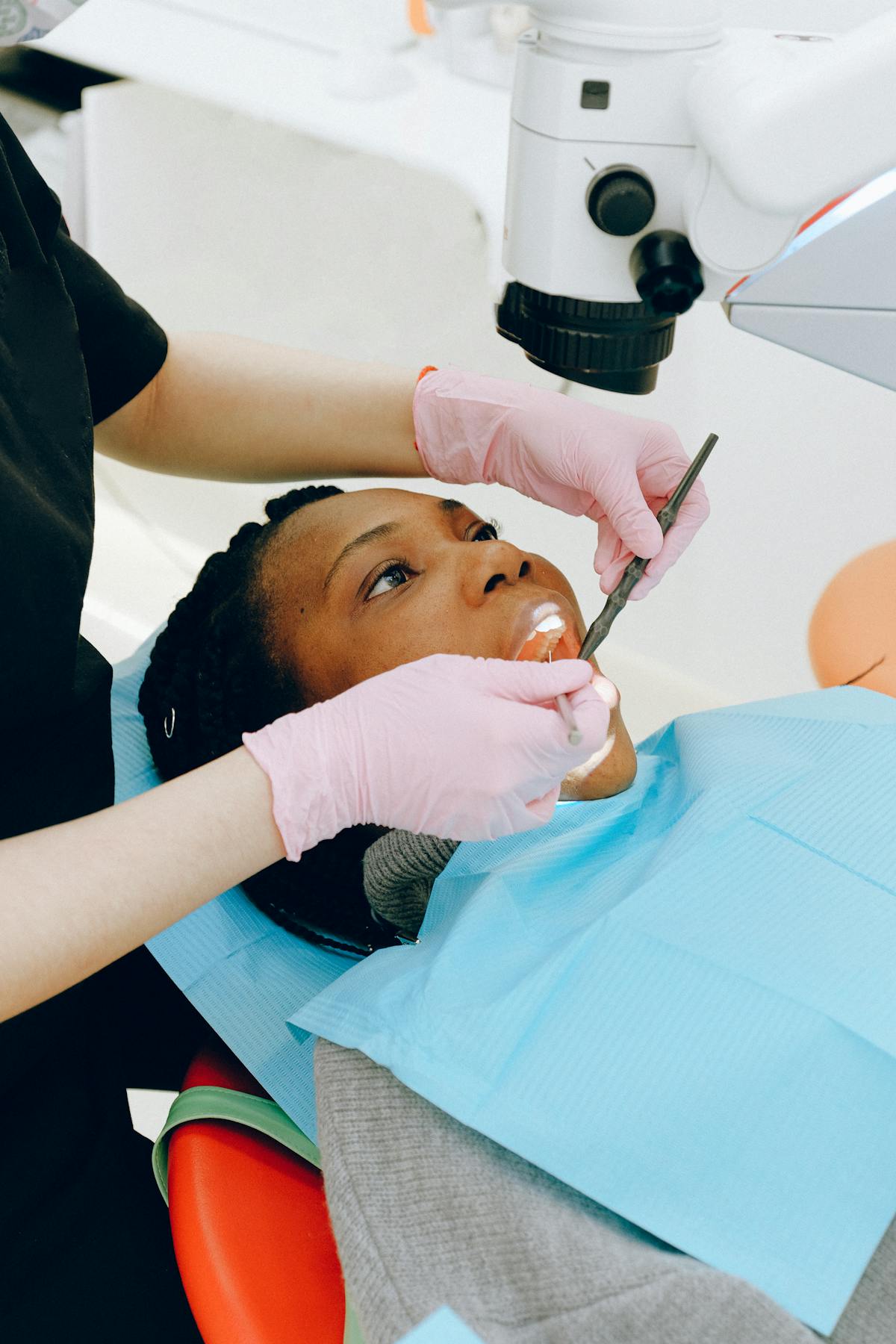
- Take digital X-rays (or a panoramic OPG X-ray) to see the position, angle, and proximity of wisdom teeth to nerves and other structures
- Discuss the findings and whether removal is recommended
Not all wisdom teeth need to be removed. If they're fully erupted, properly positioned, and easy to clean, they can sometimes be left alone with regular monitoring.
Learn more about our approach to wisdom teeth removal.
Frequently Asked Questions
Can impacted wisdom teeth cause no symptoms at all?
Yes. Some impacted wisdom teeth remain completely asymptomatic for years, which is why regular dental X-rays are important. Problems can develop silently beneath the surface.
At what age should wisdom teeth be checked?
A panoramic X-ray around age 16–18 can reveal whether wisdom teeth are present and whether they're likely to cause issues. Earlier assessment often means simpler treatment.
Do all wisdom teeth need to be removed?
No. Removal is recommended when there's evidence of impaction, infection, cyst formation, or damage to adjacent teeth. Wisdom teeth that are healthy, fully erupted, and functional can often remain.
Is wisdom teeth removal covered by health insurance?
Most Australian private health insurance with extras cover provides some benefit toward wisdom teeth removal. Coverage varies by policy, so check with your insurer for specific details.
Get Your Wisdom Teeth Checked
If you're experiencing any symptoms of impacted wisdom teeth, don't wait for the problem to escalate. Book an assessment at Shine Dental. We serve patients from Newington, Sydney Olympic Park, Wentworth Point, Auburn, Silverwater, and Lidcombe.
Call (02) 9748 4822 or book online.
Shine Dental — Unit 5, 8 Avenue of Americas, Newington NSW 2127
Open Mon–Wed & Fri 9am–5pm, Thu 9am–12pm