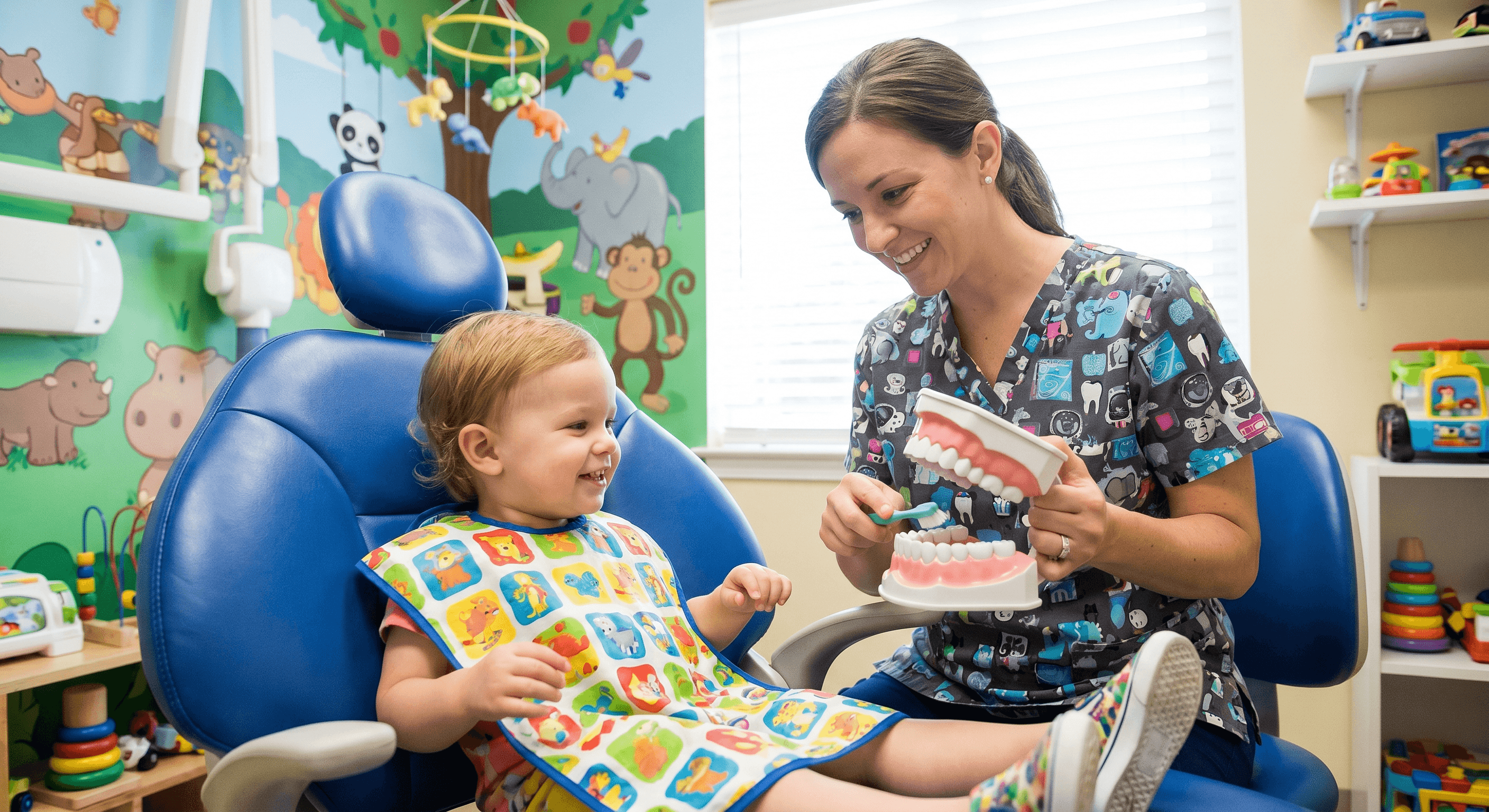
As a parent, it's not always obvious when your child needs orthodontic attention. Some signs are subtle and easy to dismiss. Catching them early, however, can make treatment simpler, shorter, and more effective.
When Should Children First See a Dentist About Orthodontics?
The Australian Society of Orthodontists recommends an orthodontic assessment by age 8–10. At this age, enough permanent teeth have usually appeared to identify developing problems, yet the jaws are still growing — which means there's more opportunity to guide development.
At Shine Dental in Newington, Dr. Cho assesses children's dental development during routine check-ups and will flag any concerns early.
10 Signs Your Child May Need Orthodontic Treatment
1. Crowded or Overlapping Teeth
If your child's permanent teeth are coming in crooked, overlapping, or there simply doesn't seem to be enough room, this is one of the clearest indicators that treatment may be needed.
2. Mouth Breathing
Children who consistently breathe through their mouth — especially during sleep — may be developing narrow dental arches. Mouth breathing is associated with:
- A long, narrow face shape
- Recessed chin
- Narrow palate that restricts space for teeth
3. Early or Late Loss of Baby Teeth
The typical timeline for losing baby teeth is between ages 6 and 12. If your child loses teeth significantly earlier or later than their peers, it's worth having their development assessed. Early loss can cause remaining teeth to drift; late retention can block permanent teeth from erupting.
4. Difficulty Chewing or Biting
If your child avoids certain foods, chews only on one side, or complains about biting being uncomfortable, there may be an alignment issue affecting how their teeth meet.
5. Thumb Sucking or Dummy Use Beyond Age 3
While thumb sucking is normal in infants and toddlers, continuing beyond age 3–4 can significantly affect jaw development and tooth position. It often leads to:
- An open bite (front teeth don't meet when the mouth is closed)
- A protruding upper front teeth
- Narrowing of the upper jaw
6. Snoring or Sleep Issues
Snoring in children is not simply a cute habit — it can indicate restricted airways, which may be related to narrow jaw development. Children who snore, mouth breathe, or have restless sleep should be assessed.
7. Visible Gaps Between Teeth
While some spacing between baby teeth is normal (and actually desirable — it suggests room for larger permanent teeth), persistent or large gaps in the permanent teeth may require attention.
8. Protruding Front Teeth
Upper front teeth that stick out significantly are more vulnerable to injury during play and sports. They can also indicate an underlying jaw relationship issue.
9. Crossbite or Underbite
- Crossbite: One or more upper teeth bite inside the lower teeth instead of outside — this can cause the jaw to shift to one side
- Underbite: The lower teeth sit in front of the upper teeth — this often relates to jaw growth patterns
Both are more effectively treated during growth.
10. Speech Difficulties
While not all speech issues are dental, lisps and difficulty with certain sounds can sometimes be linked to tongue posture, bite issues, or jaw development.
The Benefits of Early Treatment
Addressing orthodontic issues while the jaw is still growing offers several advantages:
- Guide jaw growth rather than correct it surgically later
- Create space for permanent teeth to emerge naturally
- Shorter treatment — early intervention can reduce or eliminate the need for braces in teenage years
- Prevent damage — protruding teeth and crossbites left untreated can lead to wear, trauma, and gum problems
- Improve breathing — expanding narrow jaws can improve airway space
At Shine Dental, we offer Myobrace pre-orthodontic treatment for children, which focuses on correcting the habits and muscle patterns that contribute to crooked teeth.
What Does Early Orthodontic Treatment Involve?
Treatment varies depending on the issue:
- Myobrace appliances — removable silicone devices worn 1–2 hours per day plus overnight, combined with daily exercises
- Palatal expanders — fixed or removable devices that widen the upper jaw to create space
- Space maintainers — hold space for permanent teeth when baby teeth are lost prematurely
- Habit-breaking appliances — help children stop thumb sucking or tongue thrusting
Not every child needs treatment. Dr. Cho takes a careful, evidence-based approach and will recommend monitoring if intervention isn't yet necessary.
Frequently Asked Questions
Is 5 too young for an orthodontic assessment?
Not at all. An early assessment doesn't mean treatment starts immediately — it means potential issues are identified so they can be monitored and addressed at the right time.
Does early treatment mean my child won't need braces later?
Not necessarily. Early treatment aims to reduce the complexity and duration of future treatment. Some children will still benefit from braces during their teenage years, but the process is often shorter and simpler.
How much does children's orthodontic treatment cost?
Costs vary depending on the type and duration of treatment. During your consultation, we'll provide a clear treatment plan with pricing. Many families use their private health insurance extras to offset costs.
My child's teeth look fine — should I still get an assessment?
Yes. Some orthodontic issues aren't visible to the untrained eye and are only detectable on X-rays. A routine check at age 8–10 provides peace of mind.
Schedule Your Child's Assessment
If you've noticed any of these signs in your child, or if they're approaching age 8–10 and haven't had an orthodontic evaluation, book a consultation at Shine Dental. We welcome families from Newington, Sydney Olympic Park, Wentworth Point, Auburn, Silverwater, Lidcombe, and beyond.
Learn more about children's dentistry at Shine Dental.
Call (02) 9748 4822 or book online.
Shine Dental — Unit 5, 8 Avenue of Americas, Newington NSW 2127
Open Mon–Wed & Fri 9am–5pm, Thu 9am–12pm