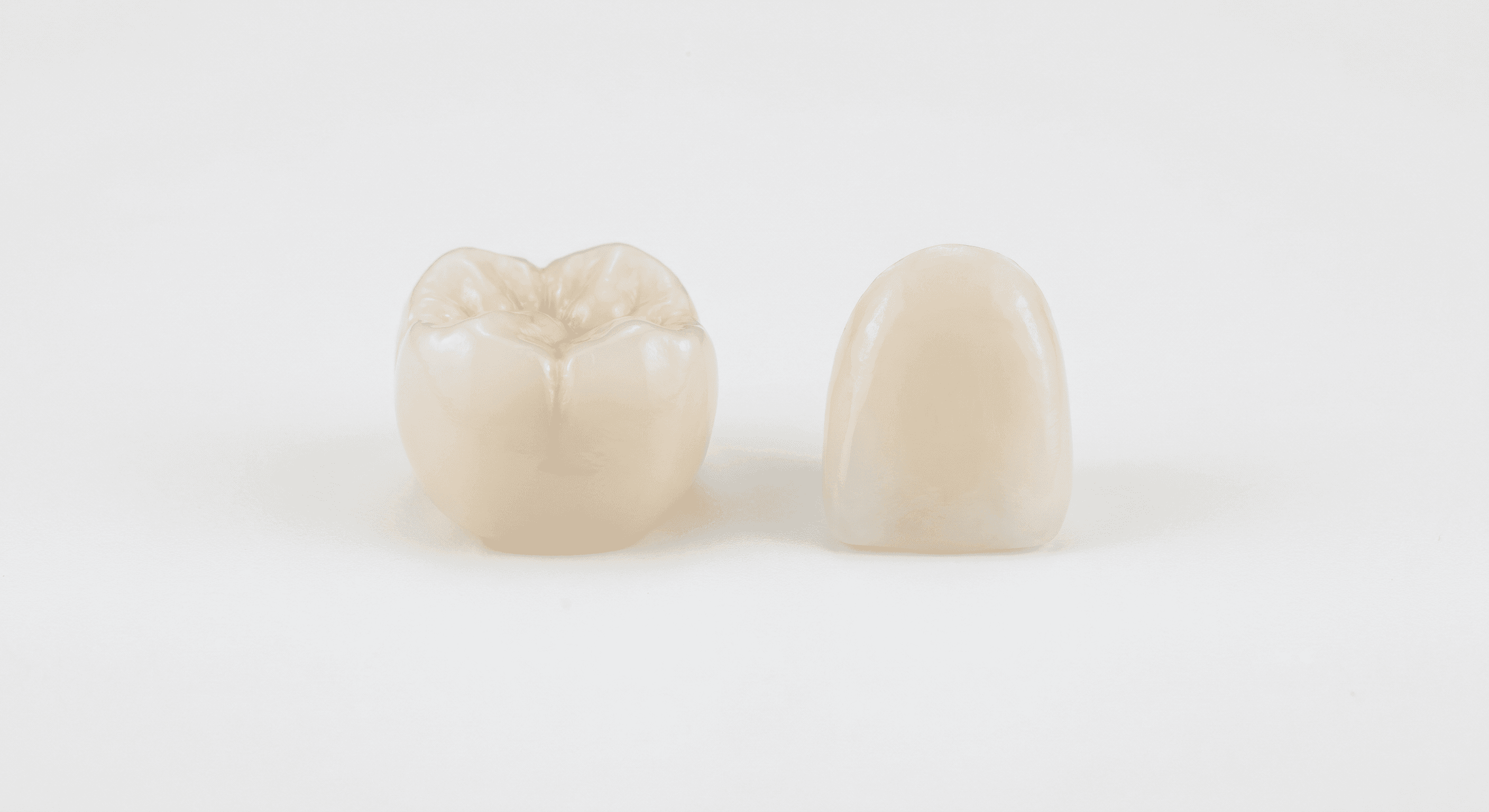
A crown coming off is unsettling, often causes no discomfort at all, and is rarely a true emergency. What you do in the first hour does affect whether it can simply be re-cemented, so it is worth knowing the steps.
Shine Dental Newington provides crown and bridge treatment, and Dr. Jin-Ho Cho — BDS (University of Sydney, 1987), more than 35 years in practice — sees these regularly. Here is what to do.
First: keep the crown
Retrieve it and keep it somewhere safe and dry — a small container or a sealed bag. Do not wrap it in tissue and put it on a bench, which is how a large proportion of crowns end up in the bin.
If the crown itself is intact and the tooth underneath is sound, re-cementing the existing crown is often possible. That is faster and less expensive than making a new one. Without the crown, a replacement is the only option.
Then: look at what came off
Two possibilities, and they lead in different directions.
The crown alone came off, and inside it is hollow. The cement has failed or the crown has lost its grip. This is the more straightforward situation.
There is tooth structure inside the crown. Part of the tooth, or a post, has come away with it. This is more involved, and the underlying tooth needs assessment before anything can be re-fitted.
You do not need to diagnose this yourself — just mention what you can see when you call, because it affects how the appointment is arranged.
What to do in the meantime
- Rinse the crown gently under water. Do not scrub it.
- Keep the exposed tooth clean. Brush it gently as normal.
- Expect sensitivity. The prepared tooth beneath a crown is often sensitive to cold, sweet things and air. This is normal and settles once the crown is back on.
- Chew on the other side. An unprotected prepared tooth is weaker than it looks and can fracture.
- Avoid very hot, very cold, sticky and hard foods on that side.
What not to do
Do not use household glue. Superglue and similar products are not intended for use in the mouth, can damage the tooth and the crown, and often make it impossible to re-cement the crown properly. This is the single most common way a re-cementable crown becomes a replacement crown.
Do not try to force it back on and leave it. If it does not seat easily it is not seated correctly, and a crown sitting slightly proud changes the bite and can crack the tooth.
Be cautious with temporary cement from a pharmacy. These products exist and can be used briefly if you cannot get to a dentist promptly, but they are a short-term measure only. Follow the packet instructions and still book an appointment.
Do not simply leave it. An uncovered prepared tooth is vulnerable, and neighbouring teeth can drift enough within weeks to stop the crown fitting.
When is it actually urgent?
Book promptly, but treat it as urgent if any of these apply:
- Significant pain, particularly throbbing or pain that wakes you.
- Swelling of the gum, face or jaw.
- A bad taste or discharge around the tooth.
- The tooth is broken at or below gum level.
- You have swallowed or inhaled the crown. Swallowing one usually passes without incident, but if you coughed or felt it go down the wrong way, seek medical attention.
Our dental emergency guide covers the wider range of urgent situations.
Why do crowns come off?
Understanding the cause matters, because it determines whether re-cementing will hold.
Decay under the crown margin is the most common reason. The cement seal fails where decay has developed at the join. Re-cementing over decay does not work — the decay must be removed first, and if too much tooth is lost the crown may no longer fit.
Cement failure with age. Cements do not last indefinitely, particularly on older crowns.
Insufficient tooth structure for retention. A short or heavily reduced tooth gives the crown less to grip.
Heavy biting forces, including grinding.
Trauma, or biting something unexpectedly hard.
Fracture of the underlying tooth, which sometimes only becomes apparent once the crown is off.
What happens at the appointment?
The tooth is examined and usually radiographed. If the underlying tooth is sound and the crown fits well, it is cleaned and re-cemented. If decay is present it is removed first, and whether the same crown still fits depends on how much tooth was affected.
Where the tooth cannot support a crown any longer, the conversation turns to the options — which may include root canal treatment and a post, or removal and replacement. Our article on saving versus replacing a tooth sets out that decision.
The practical summary
Keep the crown, keep it dry, keep the tooth clean, chew elsewhere, avoid glue, and book. Most of these end straightforwardly, and the ones that do not usually had an underlying problem that was going to surface regardless.
Booking
Call (02) 9748 4822, mobile 0430 442 018, or send an enquiry. Bring the crown with you. Consultations run in English or Korean.
Individual circumstances vary, and treatment depends on clinical assessment.