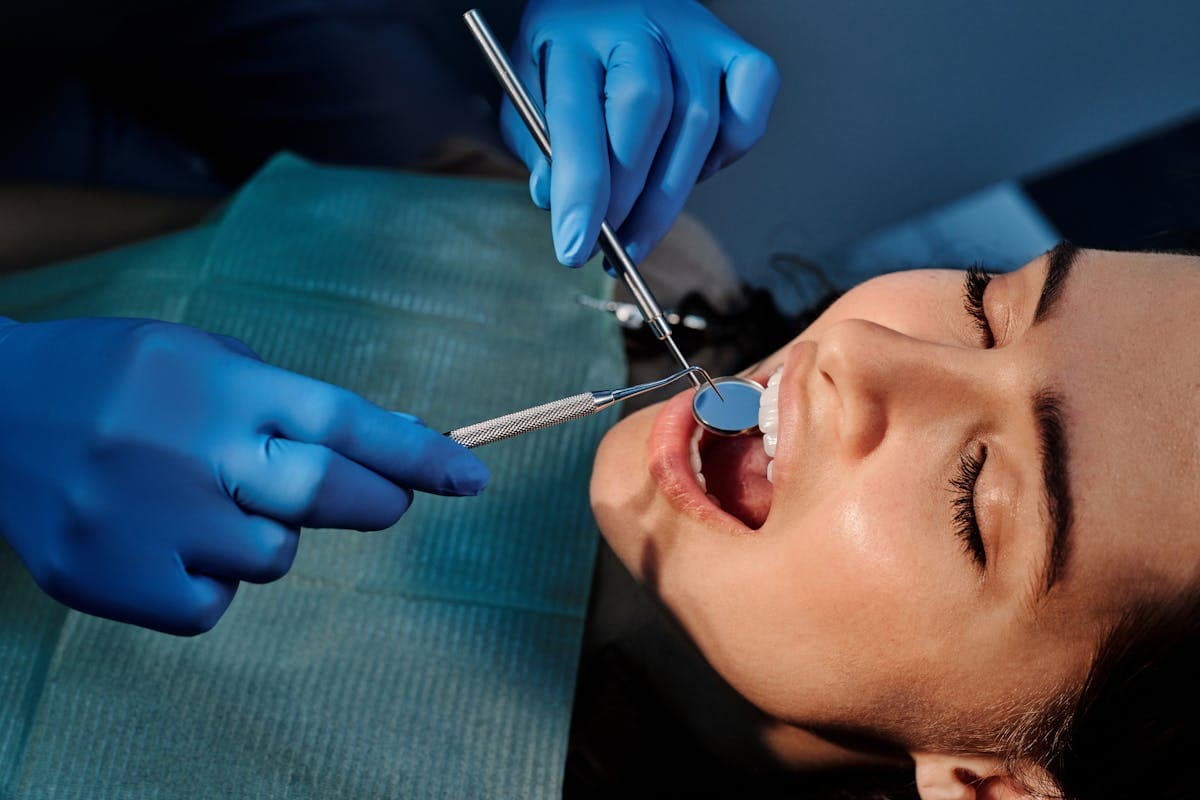
A child's first dental visit sets the tone for how they feel about dental care for years. Handled well, it is unremarkable — which is exactly the goal. This article covers when to come, what happens, and how to prepare without planting worry.
Shine Dental Newington provides children's dentistry and Dr. Jin-Ho Cho — BDS (University of Sydney, 1987), more than 35 years in practice — sees children alongside adults, often across the same family.
When should the first visit be?
The general guidance in Australia is around the time the first tooth appears, or by the first birthday.
That surprises many parents, because there is very little to examine. The point is not the examination — it is that the child becomes familiar with the room, the chair and the people before anything needs doing. A child whose first visit happens at six because of toothache has a very different introduction.
If your child is already older and has not been, that is common and not a problem. Book now rather than waiting for a reason.
What actually happens at the appointment?
For a very young child, deliberately little.
The visit usually involves a look at the teeth and gums — sometimes with the child sitting on a parent's lap rather than in the chair — a conversation about brushing, diet and habits like thumb sucking or a dummy, and questions you want to ask. It is short.
For an older child, the appointment resembles a standard check-up: examination of the teeth and gums, checking how the adult teeth are coming through and whether there is space for them, a clean if appropriate, and radiographs only if there is a specific reason. Fluoride application and fissure sealants may be discussed depending on the child's age and risk.
Nothing invasive happens at a first visit unless there is an urgent problem, and you would be told before anything was done.
How do I prepare my child without making them anxious?
The most useful advice is about what not to say.
Avoid reassurance that introduces the idea. "It won't hurt", "don't be scared", "they won't pull anything out" all plant concepts the child had not considered. Say instead that the dentist is going to count their teeth and check they are healthy.
Do not pass on your own anxiety. Children read tone. If you dread the dentist, this is worth managing separately — our article on dental anxiety covers adult strategies.
Do not use the dentist as a threat. "If you keep eating lollies the dentist will drill your teeth" makes a future appointment much harder.
Read a book about it, or play at it beforehand. Counting teeth with a toothbrush at home is good preparation.
Book a time when they are rested. Mid-morning usually beats late afternoon.
Bring a comfort item if they have one.
What if my child will not open their mouth?
Common, and not a failure. A first visit where the child sits in the chair, meets the dentist and leaves without an examination is still a useful visit. Forcing the issue on day one buys a difficult second visit.
Where a child is particularly apprehensive, several short familiarisation visits work better than one long one.
What should I be doing at home?
Brush twice daily from when the first tooth appears, with a small soft brush. Use toothpaste appropriate for the age — follow the guidance on the packaging or ask at the visit, since fluoride amounts differ for young children.
Supervise brushing until around age seven or eight. Children generally lack the manual dexterity to do it thoroughly before then, however capable they seem.
Watch drinks more than food. Frequent juice, cordial and flavoured milk — particularly from a bottle or sipper cup carried through the day — is a common driver of decay in young children. Water and plain milk between meals.
Avoid putting a child to bed with a bottle of anything other than water.
Do not share cutlery or clean a dummy in your own mouth. The bacteria involved in decay transfer this way.
Do baby teeth matter if they fall out anyway?
Yes, and this comes up often. Baby teeth hold space for the adult teeth arriving behind them. Losing one early to decay can let neighbouring teeth drift into the gap, leaving too little room and contributing to crowding later.
They also matter for eating, speech and comfort. Decay in baby teeth causes real pain and infection.
When does orthodontic assessment come in?
Growth and jaw development can usually be assessed from around ages six to eight, when a mix of baby and adult teeth is present. Early assessment does not mean early treatment — often the outcome is to monitor.
Shine Dental Newington offers Myobrace pre-orthodontic treatment, which addresses habits such as mouth breathing and tongue posture that influence how jaws develop. Our articles on what Myobrace is and signs a child may need orthodontic treatment explain the assessment.
Whether any treatment is appropriate depends on the individual child, and monitoring is a legitimate outcome.
Is there help with the cost?
The Child Dental Benefits Schedule provides capped benefits over a two-year period for eligible children, covering basic services such as examinations, cleans, x-rays and fillings. It does not cover orthodontics. Our parents' guide explains eligibility and how to check it.
HICAPS on-the-spot claiming is available for private health cover.
Booking
Call (02) 9748 4822, mobile 0430 442 018, or send an enquiry. Consultations run in English or Korean. Mention your child's age and whether they have been to a dentist before, so the appointment can be arranged accordingly.